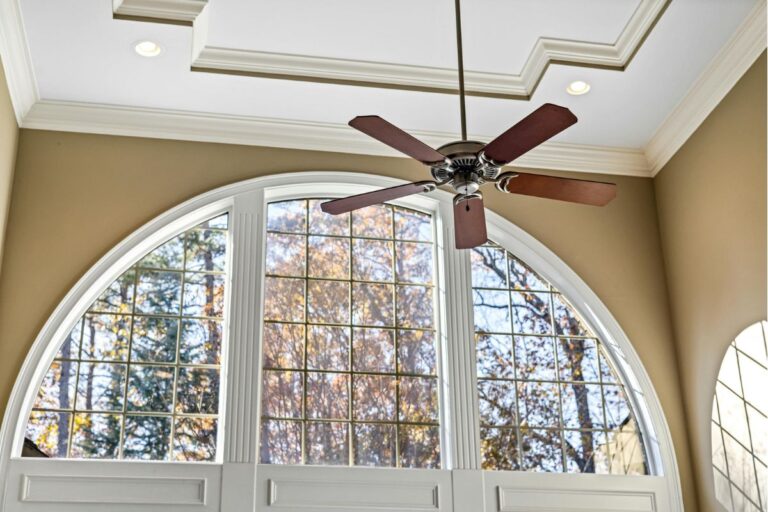

If you’ve ever walked into a room with a ceiling fan spinning and instantly felt a cool breeze, you’ve probably wondered: do ceiling fans keep house cooler, or do they just feel cooler? It’s a very common question, especially during warm days when energy bills are climbing and everyone’s trying to use less energy without sacrificing comfort.
The short answer? Ceiling fans don’t actually lower the room’s actual temperature, but they do create a cooling effect that can make your home feel significantly more comfortable and even lead to significant energy savings when used the right way.
Let’s break down how ceiling fans work, how they interact with your air conditioner or heating system, and how a simple adjustment like fan direction or speed setting can make a big difference in energy usage, air circulation, and how your home feels year-round.
Do Ceiling Fans Keep House Cooler or Just Feel Cooler?
Ceiling fans don’t change the temperature of the air itself. Instead, they cool people, not rooms. This happens through the wind chill effect (also called the wind-chill effect), which helps evaporate moisture from your skin and disperse body heat.
So while the room temperature or air temperature stays the same, the room feel changes dramatically. That’s why you can raise your thermostat setting and still feel comfortable, sometimes by as much as 4 degrees, without touching your central AC or split unit. That difference alone can save much money on energy costs over a long time.
How Ceiling Fans Improve Air Circulation
One of the biggest benefits of ceiling fans is air circulation. As the ceiling fan blades rotate, they create continuous air movement and air motion that keeps cool air from settling in one spot and warm air from lingering near the ceiling.
This helps:
- Push cooler air down into living spaces
- Prevent hot air from stagnating
- Reduce temperature differences between rooms
- Improve the overall space feel of your home
In smaller rooms, the right size of its blades or smaller ceiling fans can make a huge impact. In larger spaces like a living room, a fan with the right blade design and strong fan motor can move a surprising amount of air.
Ceiling Fans + Air Conditioning = Maximum Efficiency
Ceiling fans are a great way to support your air conditioning system, not replace it. When used together properly, they allow your hvac system to work less while maintaining a comfortable environment.
Here’s how:
- Fans help distribute cool air more evenly
- Your air conditioner cycles less often
- Lower energy consumption overall
- Reduced wear on window ACs, split units, or central AC
According to the Department of Energy, using ceiling fans lets you raise your thermostat temperature without sacrificing comfort, cutting energy use and helping your AC last longer.
The Importance of Fan Direction (Yes, It Matters)
The direction of your ceiling fan plays a huge role in how effective it is, and it all depends on the season.
Summer Direction (Warm Days)
During warm days, your fan should rotate counterclockwise at a low speed to medium or high speed. This creates a cooling breeze that blows directly downward, producing that familiar cool breeze and cooling effect.
This is often called the summer direction, and it’s the only way to get the strongest wind-chill effect.
Winter Direction (Colder Months)
In colder months, switch the fan’s direction to clockwise at the lowest speed. This creates a gentle updraft that pulls cold air up and pushes warmer air down along the walls, without creating a draft.
This helps:
- Reduce heat loss
- Improve heating efficiency
- Lower heating costs
- Support a heat pump or heating system
Most fans have a simple switch or toggle switch on the motor housing to change direction. Some newer models even use remote controls or occupancy sensors.
Speed Settings: Faster Isn’t Always Better
While high speed is great for warm days, it’s not always the most efficient fan setting.
- High speed: Best for direct cooling when the room is occupied
- Low speed: Ideal for maintaining airflow without excess energy use
- Lowest speed: Perfect for winter circulation
The most efficient fan is one that matches the size of the room, uses the correct speed setting, and is only on when someone is present. Running a fan in an empty room wastes energy, it doesn’t cool the air itself.
Energy Savings and Energy Efficiency Explained
Ceiling fans use far less electricity than an air conditioner. While an AC can significantly increase energy bills, a fan uses a small amount of energy in comparison.
Benefits include:
- Lower overall energy usage
- Reduced energy bills
- Less strain on your HVAC system
- Significant energy savings over time
Look for Energy Star rated fans, which are designed for maximum efficiency and long-term performance.
Ceiling Fans vs Other Cooling Options
While ceiling fans are a great way to improve comfort, they’re not the only option.
Other air movement solutions:
- Floor fans
- Window fans
- Whole-house fans
- Window ACs
Each has its place, but ceiling fans stand out because they’re quiet, efficient, visually appealing (hello, color options!), and effective for everyday comfort.
Special Situations That Affect Performance
Ceiling fans work best when:
- Windows are closed during peak heat
- Direct sunlight is minimized
- Cool air is already present
- The room isn’t fighting hot outdoor air
Using fans with open windows can help during cooler evenings, but during hot afternoons, open windows often let in more warm air than desired.
Maintenance Matters More Than You Think
For a fan to work efficiently over a long time, regular maintenance is key:
- Clean dust from blades
- Check blade balance
- Inspect the fan motor
- Ensure proper mounting
Even a small imbalance can reduce airflow, increase energy use, and shorten the fan’s lifespan.
Staying Cool and Comfortable
So, do ceiling fans keep house cooler? Not technically, but they absolutely make your home feel cooler, more comfortable, and more energy-efficient when used correctly. They’re a great way to reduce reliance on air conditioning, lower energy consumption, and improve your home feel year-round.
When paired with the right thermostat setting, proper fan direction, and smart usage habits, ceiling fans can help cool people, control energy costs, and create a nice breeze that makes every room more enjoyable. In short, they may not change the temperature of a room, but they can change everything about how it feels.