Overnight lows in Fort Myers can fall into the mid-40s when a strong cold front crosses Southwest Florida. That is the moment a heat pump that sat idle through eight months of cooling must reverse its refrigerant path, energize the reversing valve, and deliver a steady stream of warm air. If the outdoor coil ices, if the auxiliary heat strips stay locked on, or if the indoor blower moves only lukewarm air, indoor temperature drops faster than the equipment can recover. A gas furnace that clicks without lighting creates the same loss of comfort in a shorter span of time.
You rely on that equipment for a short season, yet the failure often arrives on the first truly cold night. Moisture remains in the air even when the thermometer falls, and that moisture can freeze on an outdoor coil that is trying to pull heat from cool night air. Electrical connections that endured a summer of daily starts can loosen. A run capacitor that performed in cooling mode can fail when the compressor starts under a different load. These conditions appear in Fort Myers homes of every age, from older ranch houses with original ductwork to newer construction with dual-fuel systems.
Dolphin Cooling & Heating, Inc. restores heat to residential systems in Fort Myers and Marco Island, Naples, Bonita Springs, Ave Maria, Estero, Fort Myers, Golden Gate, Lely, Vineyards, North Naples, Orange Tree, and Pine Ridge, FL. We have concentrated on residential repair, maintenance, and replacement since 1998. We service and replace all brands and work regularly with Trane and Carrier equipment. Free estimates and financing are available when a repair grows into a larger decision.
What a Fort Myers Cold Snap Does to Heating Equipment
A heat pump in Fort Myers spends most of the year in cooling mode. The reversing valve stays in one position for months. Lubricant settles. The outdoor coil collects pollen, salt film, and debris. When the thermostat finally calls for heat, the valve must shift, the outdoor fan must pull air across a coil that is now the evaporator, and the compressor must move refrigerant in the opposite direction. If the valve sticks, the system continues to reject heat outdoors and you feel cool air at the registers. If the coil is dirty, the unit cannot absorb enough heat from the outdoor air and it enters a long defrost cycle or trips on a safety limit.
Humidity complicates the picture even on nights that never reach freezing. A coil that is slightly dirty or a defrost sensor that is out of calibration will ice over at 48 or 50 degrees. Ice blocks airflow. The compressor works harder. Auxiliary electric heat strips come on to compensate, and the electric bill rises while rooms stay uneven. On a gas furnace, the same unused months allow rust on the igniter, a film on the flame sensor, and insects or dust in the burner assembly. The inducer motor may start, the igniter may glow, and the gas valve may open, yet the flame will not stay lit if the sensor cannot prove combustion.
Indoor conditions add another layer of stress. A filter that was last changed in June restricts airflow when the blower must move warmer, denser air. Return leaks pull unconditioned air from an attic or crawl space and dilute the supply temperature. A thermostat that was never recalibrated after a battery change can call for heat at the wrong time or fail to bring on second-stage or emergency heat. None of these problems announce themselves during a mild December afternoon. They appear together when the outdoor temperature drops and every component must work at the same time.
Coastal air in Lee County also leaves a residue on outdoor electrical parts. Contactors pit. Terminals corrode. A crankcase heater that should keep refrigerant from migrating into the compressor oil during a cold night can fail without any summer symptom. The next start then occurs with liquid refrigerant in the crankcase, which is a common cause of compressor damage after a sudden cold snap. Addressing these conditions early is simpler than replacing a compressor in January.
How We Trace a Heating Problem to Its Source
A heating complaint is rarely a single failed part. We begin with the symptoms you describe: no heat, insufficient heat, short cycling, unusual noise, ice on the outdoor unit, or a sudden jump in energy use. Then we verify thermostat settings, including heat mode, fan mode, and any emergency-heat or dual-fuel configuration. Many Fort Myers homes use heat pumps with electric backup. A thermostat left in emergency heat will run the strips continuously and never use the more efficient heat-pump cycle. We confirm that the control is asking the equipment to do the correct work before we open any panel.
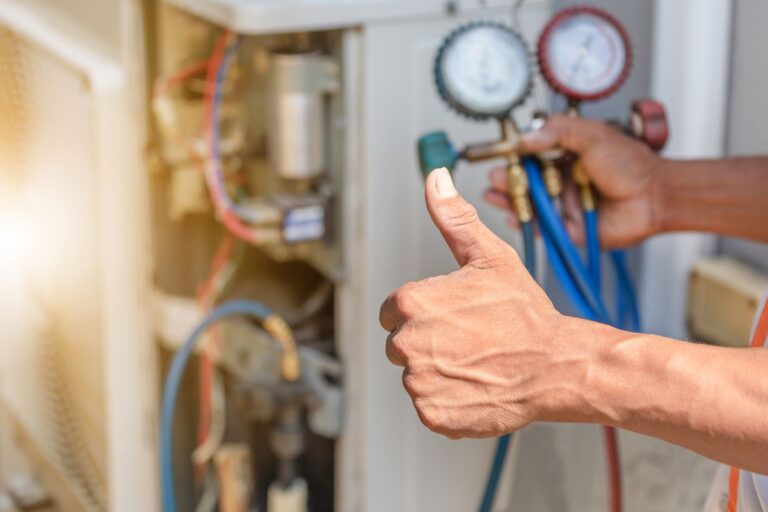
On a heat pump we measure refrigerant pressures and temperatures in heating mode, not only in cooling mode. Superheat and subcooling values shift when the cycle reverses, and a charge that was adequate in August can be incorrect for January operation. We inspect the reversing valve for temperature split across the lines, test the defrost control board and sensors, and check the outdoor fan motor and capacitor under load. We also test the auxiliary heat sequencer or heat-strip relays and confirm that the high-limit switches open and close at the proper temperatures. If the system is dual fuel, we verify the outdoor balance-point setting so the furnace and the heat pump do not fight each other.
On a gas furnace we follow a combustion and safety sequence. We confirm inducer draft, pressure-switch operation, hot-surface igniter resistance or spark quality, gas-valve function, flame-sensor microamps, and rollout and limit switch status. We look at the heat exchanger for cracks or corrosion that can send combustion gases into the airstream. We measure temperature rise across the furnace and compare it with the manufacturer range. A rise that is too high usually points to restricted airflow. A rise that is too low can point to undersized gas pressure or a burner problem. Electrical tests cover the transformer, the control board, and every safety interlock so we do not replace a part that is only a symptom of another fault.
Airflow is part of every diagnosis. We check the filter, the blower wheel, the indoor coil, and the supply and return static pressure. A heating repair that ignores airflow will fail again within days. We also inspect visible duct connections in the attic or garage, because a disconnected supply run can make one wing of the house feel as if the furnace never started. When the findings are clear, we explain them in plain language and give you a free estimate before any repair proceeds. If the better path is replacement rather than another repair, we discuss that option with the same clarity and can outline financing so you can decide without pressure.
Repairs That Return Heat Without Delay
Most heating failures in Fort Myers fall into a predictable group of components. We stock the parts that fail most often on the brands we see every week, including Trane and Carrier, and we work on every other major residential line as well. The goal is to restore safe, even heat on the first visit whenever the diagnosis and the parts allow it. When a part must be ordered, we tell you the timeline and, if the house cannot wait, we discuss temporary measures such as safe use of emergency heat or space-heat precautions.
The work itself follows the same method on every call. We isolate power, confirm the failed component with a meter or gauge rather than by guess, install the replacement to manufacturer specification, and then run the system through a full heating cycle. That cycle includes a defrost simulation on a heat pump and a complete ignition-to-shutdown sequence on a furnace. We recheck temperatures at the supply registers and at the outdoor unit so you can feel the difference before we leave. If a control board or thermostat needs a configuration change after a repair, we set those values and walk you through the new sequence so the system behaves as you expect overnight.
- Reversing valve and defrost controls – A stuck valve or a failed defrost sensor is a frequent cause of cool air or a solid block of ice on the outdoor coil. We test coil voltage, temperature split, and sensor resistance before we replace either part.
- Capacitors, contactors, and fan motors – These electrical parts fail after a long cooling season and then show themselves on the first heating start. We measure microfarads and voltage drop under load rather than relying on a visual check alone.
- Heat strips, sequencers, and limit switches – Auxiliary electric heat that never comes on, or never turns off, usually traces to a sequencer, a broken element, or a limit that has opened. We verify each stage independently.
- Igniters, flame sensors, and gas valves – On furnaces we replace brittle hot-surface igniters, clean or replace flame sensors that no longer prove combustion, and test gas valves for proper opening and closing pressure.
- Control boards, thermostats, and sensors – A board that lost a relay or a thermostat that will not call for second-stage heat can look like a mechanical failure. We confirm communication and configuration before we change hardware.
After the repair we look at the conditions that contributed to the failure. A coil that iced because it was dirty gets a cleaning recommendation. A furnace that overheated because of a clogged filter gets a clear filter schedule. We do not leave a home with a working part sitting on top of an unresolved airflow or drainage problem. That extra step is how a January repair stays reliable through February and March, when another front can arrive with little warning.
Comfort That Holds Through the Rest of Winter
A completed repair is the start of a more stable season, not the end of the conversation. We recommend a simple operating check after the first cold night: walk the rooms, feel the supply air, and listen for short cycling or a fan that runs without heat. If anything feels off, we want to hear from you while the details are still fresh. Dolphin Cooling & Heating, Inc. offers 24/7 emergency service because a heating failure at 2 a.m. during a cold snap is not a problem that should wait until morning office hours. You can reach us at any hour, and we treat after-hours heating calls with the same diagnostic standard we use during the day.
Maintenance after a repair reduces the chance of a second failure in the same season. A heating tune-up includes a second look at the items that sit unused most of the year: reversing-valve operation, defrost timing, heat-strip amp draw, ignition quality, and temperature rise. It also includes a filter and airflow check so the blower is not working against a restriction. Homes that sit vacant for part of the winter, including those used by seasonal residents, benefit from a pre-arrival inspection so the system is ready when you unlock the door. We can schedule that visit around your travel dates.
Some systems reach a point where repeated repairs no longer make sense. An older heat pump with a weak compressor, a furnace with a compromised heat exchanger, or a unit that uses a refrigerant that is being phased out may be more costly to keep than to replace. When we see that pattern, we say so directly and provide a free estimate for replacement along with financing options. We still complete a safe repair if that is what you choose. The decision stays with you. Our role is to give you accurate information about the equipment in your home, the climate it must handle, and the choices that protect both comfort and budget.
Fort Myers winters are short, but they are not optional. When the temperature drops, you need heat that starts, stays on, and distributes evenly through the house. Dolphin Cooling & Heating, Inc. has provided that service to residential customers across Southwest Florida since 1998. We bring the same residential focus, brand coverage, and emergency availability to every heating call in Fort Myers. If your system is short cycling, blowing cool air, icing over, or failing to ignite, we will find the cause, explain the repair, and restore warmth with work that is built to last through the next cold front and the one after that.