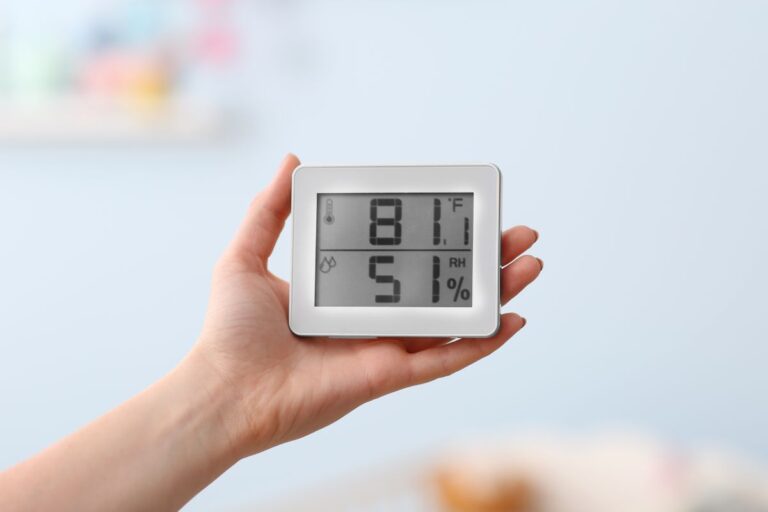

When your home starts to feel sticky, muggy, or downright uncomfortable, it’s time to check your indoor humidity levels. Many homeowners don’t realize that humidity plays an important role in comfort, health, and even energy efficiency. If you’re wondering if 70% humidity is too high for a house, the short answer: yes, it’s more than the optimal humidity level recommended by the Environmental Protection Agency (EPA) and can lead to a variety of potential problems if not addressed quickly.
What Is the Ideal Indoor Humidity Level?
The ideal indoor humidity level for most homes is between 30% and 50%. This relative humidity level means the measure of the amount of water vapor in the air is balanced, there’s not too much moisture or too little. Once your home’s humidity level rises above 60%, the air becomes humid air, which can feel warmer and heavier. At 70%, you’re entering the zone where mold growth, dust mites, and other health issues can thrive.
The Environmental Protection Agency warns that excess moisture indoors can lead to potential damage to building materials, furniture, and even your HVAC system over time.
How High Humidity Affects Comfort and Health
When high humidity levels linger for a long time, your body struggles to regulate body temperature. In humid conditions, sweat doesn’t evaporate as easily, which makes it harder to cool off and increases the risk of heat exhaustion or heat stroke, especially during humid summer months.
Too much indoor relative humidity can also cause itchy eyes, dry skin, or make respiratory health conditions worse. People with asthma, allergies, or sinus issues may find that humid air triggers symptoms more frequently.
And that’s not all, excessive humidity creates an environment for dust mites and mold growth, both of which can lead to health problems and potential damage in your living space.
Read more: The Effects of Humidity in Southwest Florida on Indoor Air Quality
Common Causes of High Indoor Humidity
You might be surprised how everyday activities contribute to humidity issues. Hot showers, boiling water at the kitchen sink, or drying clothes indoors all release grams of water vapor into the air. In humid climates or warmer climates, where outdoor dew points are higher, your home can easily accumulate much indoor humidity.
If your air conditioner isn’t properly sized or is short cycling, it won’t remove enough moisture from the air. Your HVAC system does more than cool the air, it also dehumidifies it. But when it’s running for short bursts or lacks proper ventilation, the moist air just lingers.
Signs Your Home Has Too Much Humidity
If you’ve noticed condensation forming on exterior walls or windows, a musty smell, or damp spots on ceilings, these are classic signs of too much humidity. Other clues include:
- Feeling warm air even when your air temperature is low
- Persistent mold growth around bathrooms, basements, or the kitchen sink
- Swelling or warping of building materials
- Feeling clammy despite cooler air from your air conditioner
If this sounds familiar, it’s a good idea to measure your moisture level with a hygrometer and assess whether you’re dealing with excess moisture.
The Best Way to Control Indoor Humidity
There are simple steps you can take to bring your home’s humidity level back to the best humidity range:
- Use your air conditioner efficiently. A well-maintained HVAC system helps remove moist air while delivering cooler air throughout the rest of the house.
- Improve ventilation. Install or use extractor fans in bathrooms and kitchens, and open trickle vents on windows when outdoor air isn’t too humid.
- Add a whole-house dehumidifier. For persistent humidity issues, an Aprilaire Healthy Air Professional can recommend a whole-house dehumidifier that integrates with your existing system for year-round humidity control.
- Avoid adding too much moisture. Cover pots while cooking, take shorter hot showers, and ensure central heating doesn’t create dry air during winter months.
- Seal leaks and insulate. Proper ventilation and insulation around exterior walls can prevent excessive humidity buildup and protect your building materials.
Why Humidity Control Is the Most Important Thing for Home Comfort
When you live in an area with high temperatures, controlling your home’s humidity level ensures better energy efficiency and comfort. When the air feels sticky, your air conditioner has to work harder, increasing energy costs. Keeping your relative humidity level in check helps your system cool the air more efficiently, since drier air feels cooler than humid air at the same given temperature.
This balance also prevents potential damage to your home and health problems caused by mold, dust mites, or excess moisture.
Should You Open Windows to Lower Humidity?
You might think opening windows helps, but that depends on the outdoor temperature and humidity. On humid days, bringing in outdoor air can make things worse. In humid climates, open windows may let in even more water vapour, raising your indoor relative humidity.
Instead, rely on ventilation systems, extractor fans, or a whole-house dehumidifier for reliable results.
When to Call a Professional
If you’ve been battling humidity issues for the past week or longer and can’t seem to balance your indoor air, it might be time to call an HVAC expert. They can evaluate your HVAC system, check for short cycling, and recommend the best way to restore the ideal humidity level in your living space.
The Verdict on Indoor Humidity
So, is 70% humidity too high for a house? Yes, keeping your home at that higher temperature with too much humidity can lead to potential problems. Maintaining the best humidity balance in your home isn’t just about comfort, it’s about protecting your health, your home, and your HVAC system for the long term.