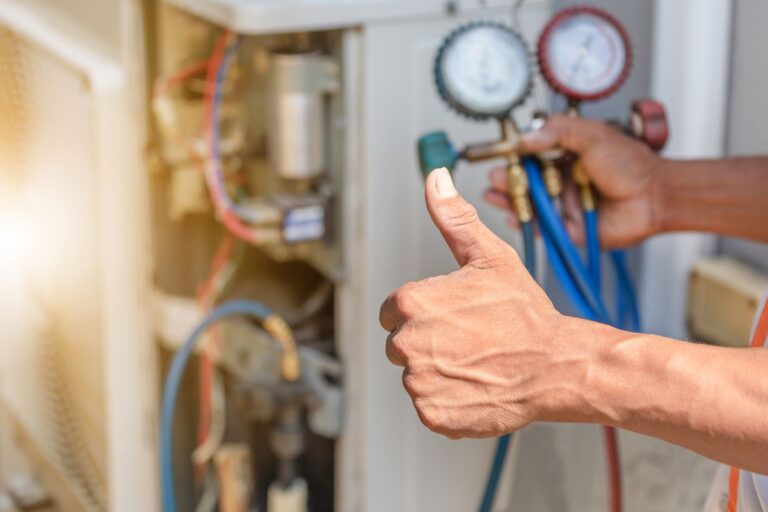

The Cold Snap That Catches Golden Gate Homeowners Off Guard
A cold front pushes through Golden Gate a handful of times each winter, and the temperature can drop faster than most homeowners expect. When it does, you reach for a thermostat that has not called for heat in months. Sometimes the system responds without a problem. Other times you feel lukewarm air, hear an unfamiliar noise, or get nothing at all. That gap between expectation and reality is when most heating repair calls to Dolphin Cooling & Heating, Inc. begin.
We understand that a heating problem in Golden Gate rarely happens at a convenient time. The equipment sits idle for the majority of the year, then must work hard during a brief cold period. This pattern puts stress on parts that have not moved in months. Our job is to get your system producing steady, comfortable heat again, and to explain clearly what went wrong so you are not surprised the next time a front arrives.
Why Heating in Golden Gate Depends on the Heat Pump
Most homes in Golden Gate do not have a traditional furnace. Instead, they use a heat pump, which is the same unit that cools the home during the long summer. A heat pump does not burn fuel to make heat. It moves heat from one place to another. In cooling mode, it pulls heat out of your home and releases it outside. In heating mode, a reversing valve flips the process, so the system pulls heat from the outdoor air and brings it inside. This is an efficient method in a mild climate, and it fits Golden Gate well because the weather rarely gets extremely cold.
Because the same equipment handles both jobs, a fault in the heat pump can show up in either mode. A unit that cools fine in July might struggle to heat in January, or the reverse. When you understand this dual role, many common complaints make more sense. The reversing valve, the outdoor coil, the defrost cycle, and the auxiliary heat strips are all parts that only matter during heating season. A heat pump can look perfectly healthy all summer and still hide a heating problem that only appears when you switch modes.
Questions Golden Gate Homeowners Ask Us Most
Before we send a technician, we often hear the same concerns over the phone. Answering them early helps set clear expectations and, in some cases, points to a simple fix you can check yourself.
- Why is my heat pump blowing cool air: During a defrost cycle or when auxiliary heat has not engaged, the air from your vents can feel cooler than expected. If this continues for a long time, it usually points to a refrigerant, valve, or control problem.
- Why does my system smell like burning when heat first comes on: A brief burning odor at the start of the season is often dust burning off the heat strips. If the smell lingers or is strong, turn the system off and call us.
- Why won’t my thermostat call for heat at all: This can be a thermostat setting, a tripped breaker, a blown fuse, or a failed control board. It is worth checking the breaker and the thermostat mode before scheduling a visit.
- Why is my energy bill so high when I use heat: Heat pumps that lean heavily on auxiliary heat strips use far more electricity. A stuck reversing valve or low refrigerant can force the system into this expensive backup mode.
When a simple check does not solve the issue, that is where our diagnostic work takes over. We do not want you to spend money on a repair you do not need, so we always confirm the true cause before we recommend any parts or labor.
How We Diagnose a Heating Failure
Our diagnostic process follows a clear order so nothing gets missed. We start with the parts most likely to fail and work toward the more complex components only when the evidence points there. This keeps the visit efficient and the findings accurate.
- Confirm the complaint: We run the system in heating mode and observe the exact behavior you described, whether it is cool air, no air, or short cycling.
- Check power and controls: We inspect the breaker, disconnect, thermostat signal, and control board to confirm the system is getting the right commands.
- Test the reversing valve: Because this valve is what switches the unit into heat, we verify it is shifting correctly and holding position.
- Measure refrigerant and airflow: Low refrigerant reduces heat output and can trip safety controls. We also check the blower and filter, since restricted airflow mimics many other faults.
- Verify auxiliary heat: We confirm the electric heat strips and their sequencers work, since these provide backup on the coldest mornings.
Once we complete these steps, we explain what we found in plain terms. You get a clear picture of the problem, the repair options, and what to expect afterward. We service and replace all brands, and we work regularly with Trane and Carrier equipment, so the diagnostic approach adapts to whatever unit sits at your home.
The Heating Repairs We Perform Most Often in Golden Gate
After years of serving this area, we see certain failures repeat, especially at the start of a cold front when equipment first wakes up for the season. The most common repairs involve the reversing valve, which can stick after months of inactivity, and the defrost control board, which manages how the outdoor coil sheds frost. When either part fails, the system may run but produce little usable heat.
We also handle a large share of capacitor and contactor replacements. These small electrical parts wear out over time, and when they fail, the compressor or fan may not start. Refrigerant issues are another frequent cause, since a system that is low on charge cannot move enough heat to keep the home comfortable. Finally, we repair and replace failed auxiliary heat strips and the sequencers that control them, which matters most on the few mornings when the temperature drops far enough that the heat pump alone cannot keep up.
Each of these repairs restores the balance between the heat pump and its backup systems, so your home warms up quickly without wasting energy. When a unit is old enough that repeated repairs no longer make sense, we walk you through replacement options honestly and offer free estimates so you can compare the cost of fixing against the value of a new, more efficient system.
Fast Response When the Temperature Drops
Cold weather in Golden Gate does not last long, so a heating failure feels urgent while it is happening. That is why Dolphin Cooling & Heating, Inc. offers 24/7 emergency service. If your heat quits late at night during a front, you do not have to wait until morning to reach us. We understand that a cold house with young children or older family members is not something that can wait, and we respond accordingly.
Beyond emergency calls, we focus on residential repair, maintenance, and replacement, so heating repair is a core part of what we do rather than a side service. Regular maintenance before the cold season is the best way to avoid a surprise failure, because we can spot a weak capacitor or a sluggish reversing valve before it strands you without heat. We serve Golden Gate along with Marco Island, Naples, Bonita Springs, Ave Maria, Estero, Fort Myers, Golden Gate, Lely, Vineyards, North Naples, Orange Tree, and Pine Ridge, FL, bringing the same steady, matter-of-fact service to each community.
Why Golden Gate Homeowners Choose Dolphin Cooling & Heating, Inc.
Serving Southwest Florida since 1998, we have built our reputation on doing the work right and explaining it clearly. We service and replace all brands, we offer free estimates on replacements, and we provide financing so a larger repair or a new system does not have to strain your budget all at once. Our technicians treat your home with care and leave you with a heating system you can trust the next time a cold front rolls through.
When your heat pump struggles on a cold Golden Gate morning, you want a company that knows this equipment, this climate, and the way the two interact. That is exactly the focus we bring to every heating repair. Call Dolphin Cooling & Heating, Inc., and we will get your home warm and comfortable again.