
When the hot summer months hit, one of the first questions on many people’s minds is: What is the cheapest way to run your AC? With rising utility bills, unpredictable outdoor temperatures, and cooling costs that seem to climb every year, it’s a good idea to look at the most cost-effective ways to stay comfortable indoors without draining your wallet. The good news is that small changes can go a long way toward reducing your energy consumption and electricity bill.
Tips to Lower Your AC Energy Costs
Smart Thermostats and Proper Thermostat Settings
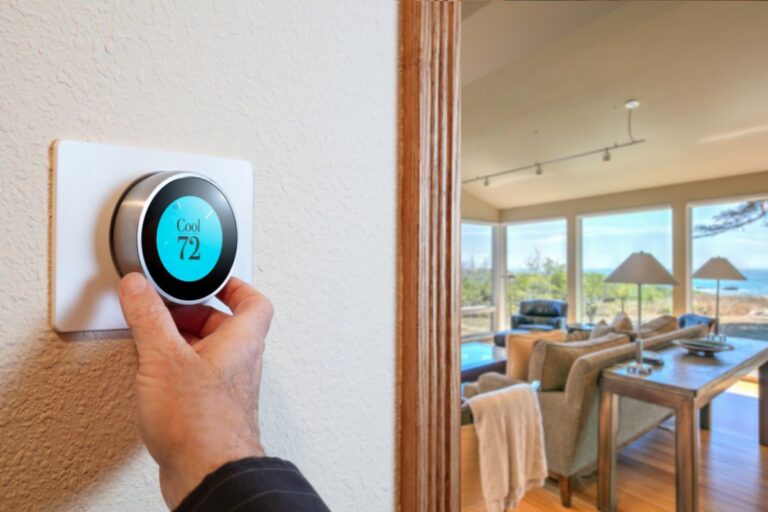
The first step to lowering energy costs is taking control of your indoor temperature with either a smart thermostat or a programmable thermostat. The Department of Energy suggests setting your thermostat to a slightly higher temperature when you’re away and lowering it only when you’re home.
It’s also smart to set the temperature a few degrees higher than you normally would. Most people won’t notice a difference in comfort, but your AC unit will use much less energy in the long run. Also, be sure to place the thermostat in a cooler place in your home, away from bright windows or direct sunlight and heat-producing appliances. If your thermostat reads warmer air than the rest of the house, your HVAC system will run longer than it needs to, increasing energy usage and monthly costs.
A smart thermostat can even adjust automatically based on your habits and the outside temperature, which means less energy use and more energy savings on your utility bills.
Use Ceiling Fans to Move Cool Air
Running your AC at full blast isn’t always necessary. A great way to use less energy is by pairing your AC unit with ceiling fans. Fans don’t actually lower the indoor temperature, but they circulate cool air and push out warm air, making the living room or bedroom feel more comfortable. This allows you to keep your thermostat at a slightly higher temperature setting while maintaining the same comfort level.
Keep Your AC Unit in Top Shape with Regular Maintenance
An AC unit that’s clogged with dirty filters or suffering from air leaks will use much more energy than necessary. Regular maintenance, like replacing air filters every 1–3 months, sealing ductwork, and scheduling a home energy audit, keeps your system running efficiently.
Another good idea is sealing off your home from the inside. Look for gaps around windows, doors, and vents where warm air can seep in and cool air can escape. This keeps your indoor temperature consistent and prevents your AC from working harder than it should.
Modern units with a high seasonal energy efficiency ratio (SEER) rating use less energy and deliver colder air compared to older non-inverter units, which waste a lot of energy in the long run.
Block Out the Sun and Manage Heat
Your AC works hardest during the heat of the day, especially when direct sunlight pours through your windows. Adding curtains to bright windows is an easy way to lower cooling costs. Not only do they block out hot air and reduce the amount of sunlight heating your home, but they also help maintain a steady indoor temperature. Pairing curtains with proper insulation and window coverings makes a big difference in how much electricity your cooling systems need to keep your home comfortable.
Choose the Right Size Cooling System
Many people think a bigger unit equals better cooling, but an AC that’s not the right size for your home will drive up running costs. A unit that’s too large will cycle on and off constantly, while one that’s too small will run at full speed without reaching the set temperature. Both waste a lot of energy and increase your AC bill.
Consulting with an HVAC professional to choose the most energy-efficient model is a great idea if you’re considering a new unit or even a portable air conditioner or window air conditioner for smaller spaces.
Adjust to Outdoor Temperatures
Your AC uses more energy when outdoor temperatures soar, so it’s wise to plan your thermostat settings around the heat of the day. Keep blinds and curtains closed, especially on bright windows, and try to keep the indoor temperature only 7–10 degrees cooler than the outside temperature. As a general rule, the less difference between outdoor and indoor climate zones, the lower your energy consumption.
What is the Cheapest Way to Run Your AC?
The best way to save money on your AC bills is to combine these tips for the most possible energy efficiency. At the end of the day, lowering electricity bills isn’t about one big fix but about making small, consistent changes that add up to significant energy savings. Whether you’re upgrading to modern units, sticking with your central air system, or using a window air conditioner, being strategic about your energy usage will always be the cheapest way to run your AC.